
Medical oxygen cylinders play a critical role in oxygen therapy, emergency care, critical care medicine, and patient transport. Selecting the correct oxygen cylinder size is essential for ensuring uninterrupted oxygen delivery, patient safety, portability, and cost-effectiveness.
Whether you are purchasing an oxygen cylinder for home care, a healthcare facility, an ambulance, or industrial medical applications, understanding oxygen cylinder capacities and duration can help you make an informed decision.
This guide explains common medical oxygen cylinder sizes, their applications, expected duration, and factors to consider before purchasing.
Buy Oxygen Cylinder
What Is a Medical Oxygen Cylinder?
A medical oxygen cylinder is a high-pressure vessel designed to store compressed medical-grade oxygen for therapeutic use. Oxygen cylinders provide supplemental oxygen to patients experiencing respiratory distress, low blood oxygen levels, chronic lung diseases, post-operative recovery, or emergency medical conditions.
Medical oxygen cylinders are commonly used in:
- Hospitals and ICUs
- Emergency departments
- Ambulances
- Home healthcare settings
- Nursing homes
- Rehabilitation centers
- Disaster management and emergency response units
Why Oxygen Cylinder Size Matters
Choosing the correct cylinder size affects:
- Oxygen availability during treatment
- Cylinder portability
- Frequency of refilling
- Storage requirements
- Transportation convenience
- Emergency preparedness
A cylinder that is too small may require frequent refills, while an oversized cylinder may be difficult to transport and store.
Buy Medical Equipments
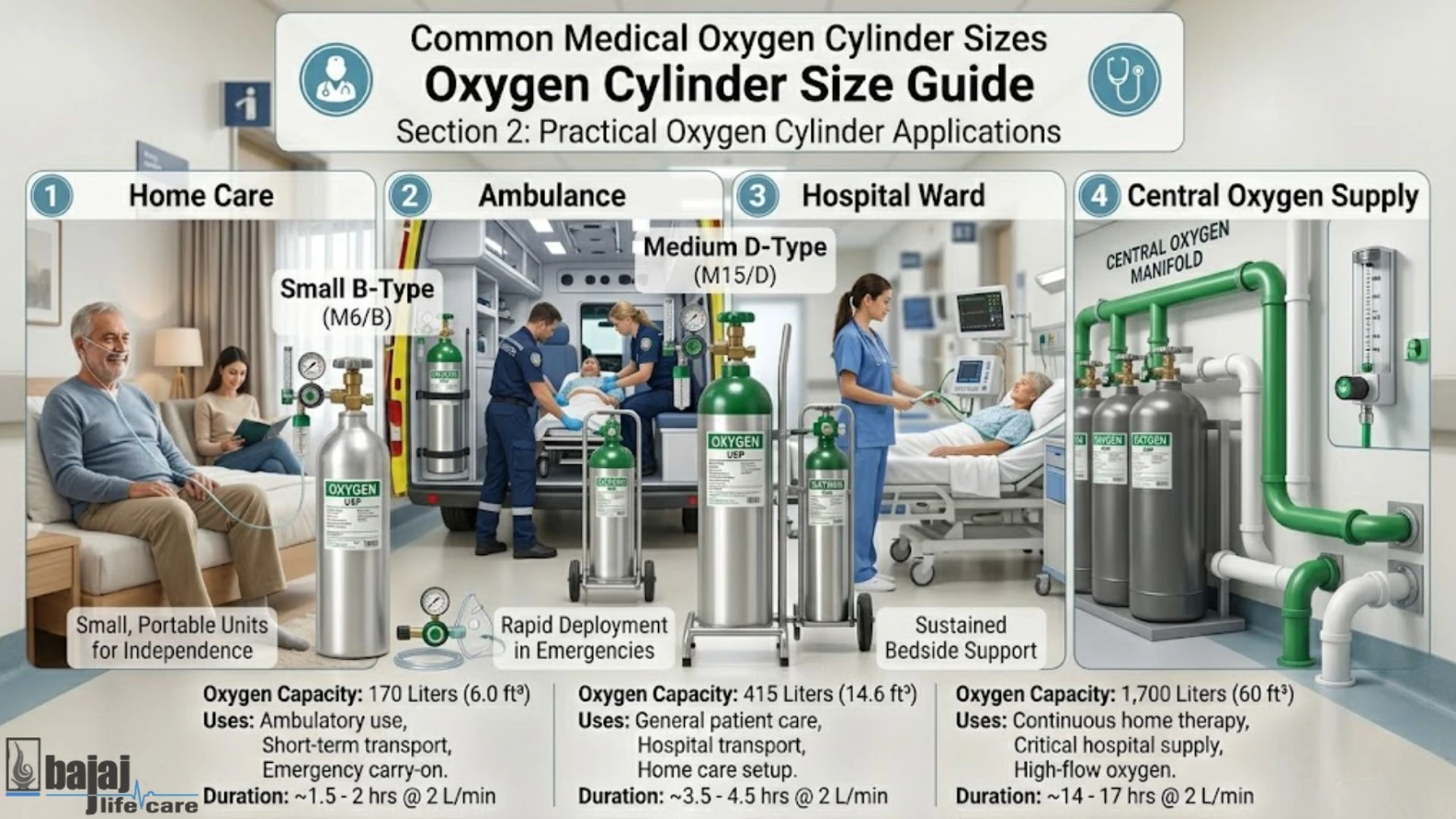
Common Medical Oxygen Cylinder Sizes
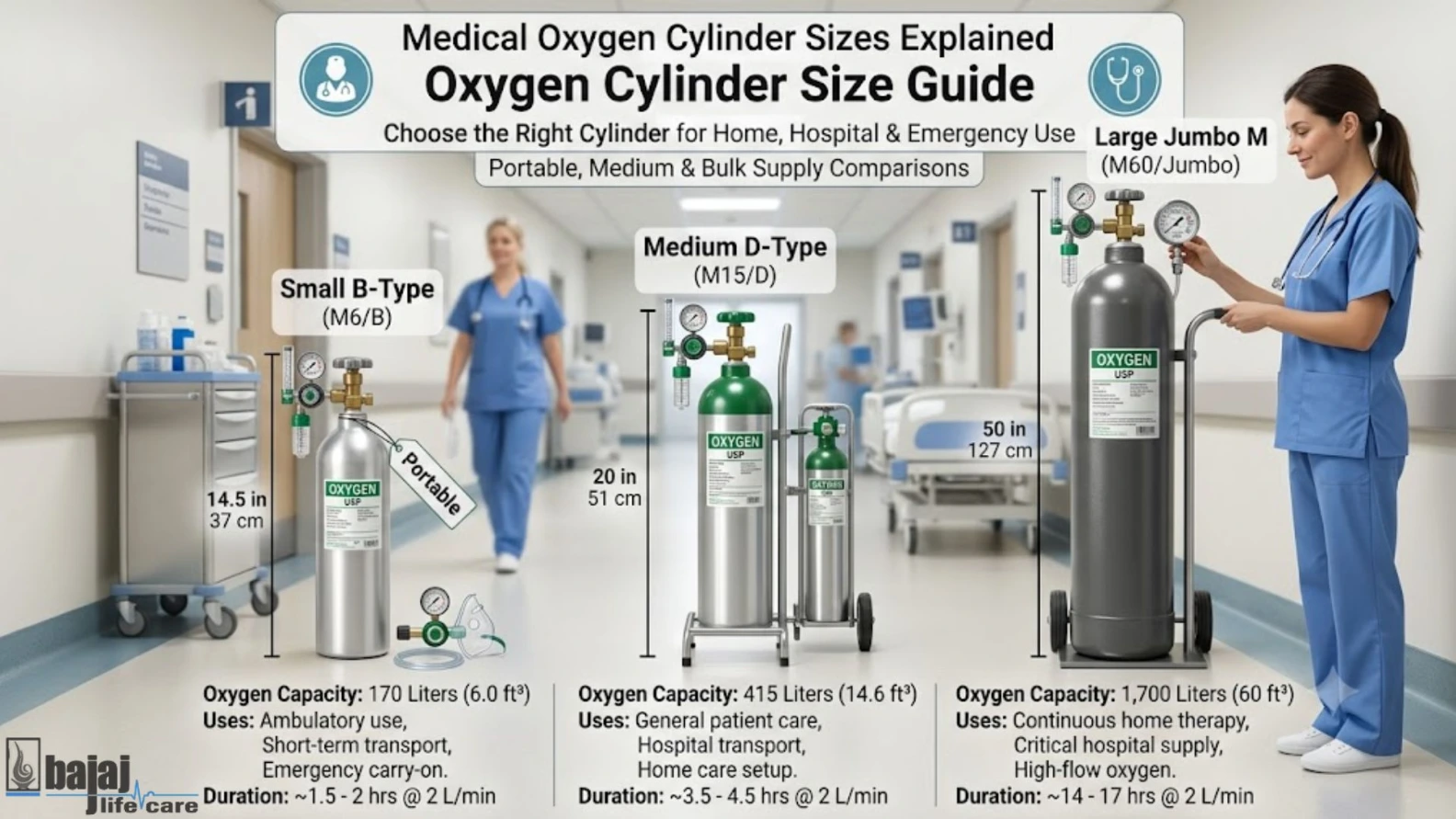
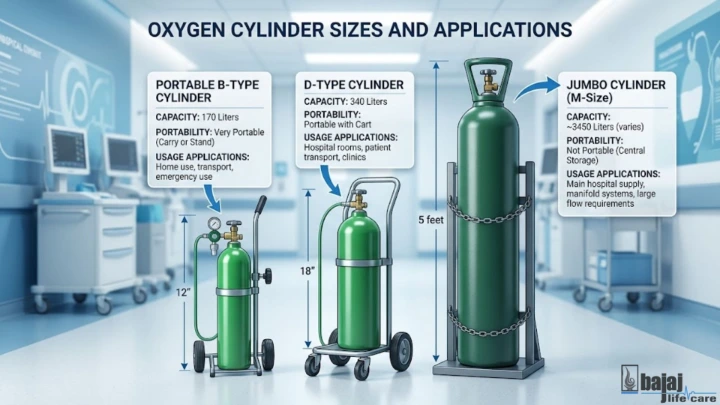
1. Portable Oxygen Cylinders (B-Type)
Water Capacity: Approximately 10 Liters
Oxygen Capacity: Around 1500 Liters
Best For:
- Home oxygen therapy
- Patient transportation
- Emergency backup oxygen
- Ambulance use
Advantages:
- Lightweight and portable
- Easy to carry
- Suitable for short-duration oxygen therapy
Portable oxygen cylinders are commonly used by patients requiring intermittent oxygen support or for emergency response situations where mobility is important.
2. D-Type Oxygen Cylinders
Water Capacity: Approximately 46.7 Liters
Oxygen Capacity: Around 7000 Liters
Best For:
- Hospitals
- Intensive Care Units
- Long-duration oxygen support
- Medical facilities with moderate oxygen demand
Advantages:
- Longer oxygen supply
- Reduced refill frequency
- Suitable for continuous oxygen therapy
D-Type cylinders are among the most widely used cylinders in healthcare institutions.
3. Jumbo Oxygen Cylinders
Water Capacity: Approximately 47 Liters
Best For:
- Large hospitals
- Oxygen manifold systems
- Medical gas pipeline systems
- High-volume oxygen consumption environments
Advantages:
- High oxygen storage capacity
- Cost-effective for institutional use
- Supports multiple patients through manifold systems
These cylinders are generally stationary and integrated into centralized oxygen supply systems.
Buy All types of Medical Regulators
How Long Does an Oxygen Cylinder Last?
The duration of oxygen supply depends on:
- Cylinder capacity
- Oxygen flow rate prescribed
- Patient oxygen requirements
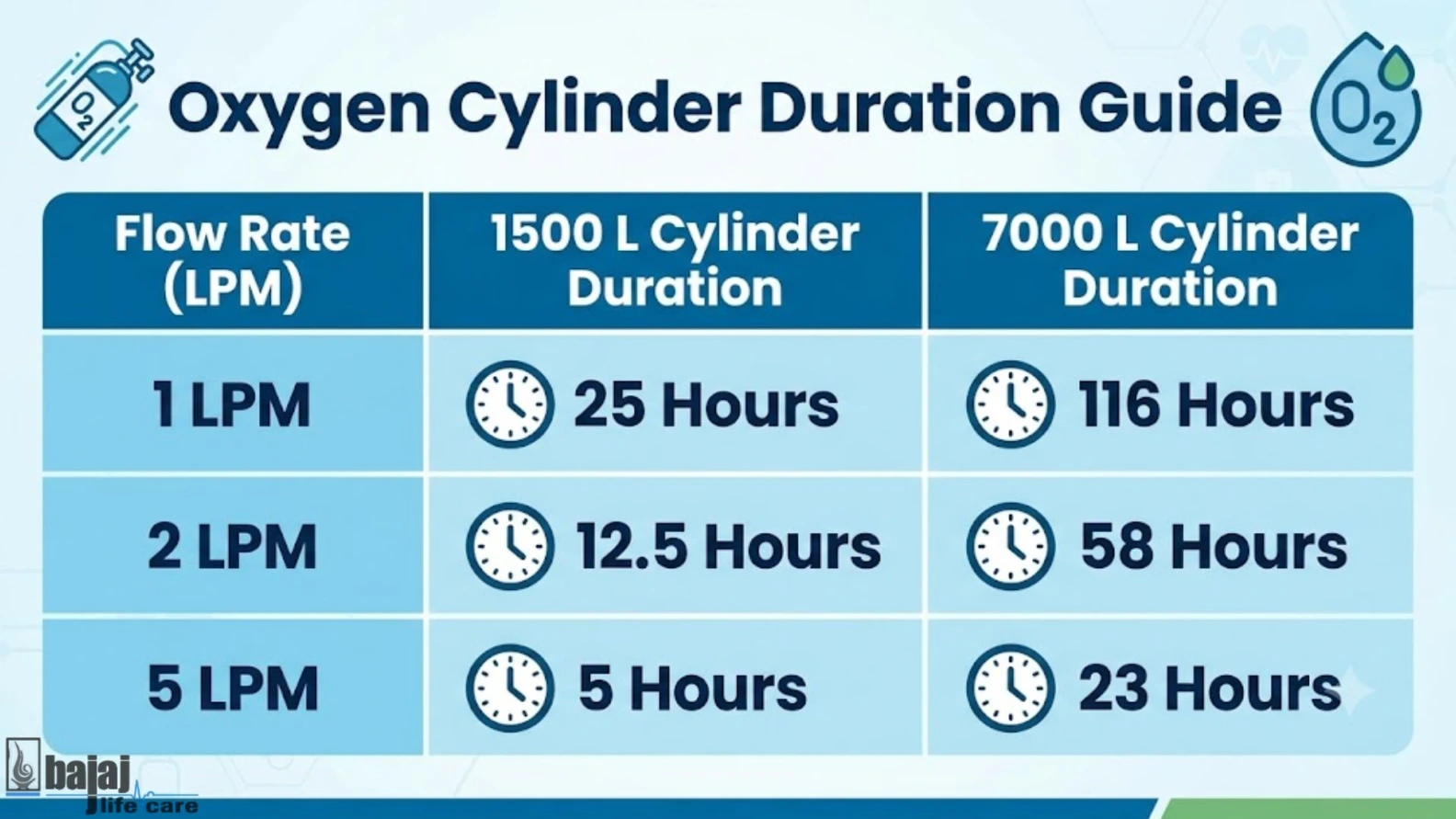
Approximate Oxygen Cylinder Duration
| Oxygen Flow Rate | 1500 L Cylinder | 7000 L Cylinder |
|---|---|---|
| 1 L/min | 25 Hours | 116 Hours |
| 2 L/min | 12.5 Hours | 58 Hours |
| 5 L/min | 5 Hours | 23 Hours |
| 10 L/min | 2.5 Hours | 11 Hours |
Formula:
Oxygen Duration (Minutes) = Total Oxygen Capacity ÷ Flow Rate
For example:
1500 Liters ÷ 2 L/min = 750 minutes (approximately 12.5 hours)
Actual duration may vary depending on regulator settings and residual cylinder pressure.
Oxygen Cylinder Selection Based on Use Case
Home Oxygen Therapy
Recommended Cylinder:
- Portable B-Type Cylinder
- Portable Oxygen Kit
Suitable for:
- COPD patients
- Pulmonary fibrosis
- Post-COVID respiratory recovery
- Home healthcare patients
Buy Portable Oxygen Can
Ambulance and Emergency Transport
Recommended Cylinder:
Suitable for:
- Emergency medical services
- Patient transfer
- First-response oxygen support
Hospitals and Nursing Homes
Recommended Cylinder:
- D-Type Cylinder
- Jumbo Cylinder Systems
Suitable for:
- Continuous oxygen therapy
- ICU support
- Central oxygen supply systems
Industrial Medical Backup
Recommended Cylinder:
- Jumbo Cylinder
Suitable for:
- Emergency reserve oxygen
- Healthcare infrastructure backup
Essential Accessories Required with an Oxygen Cylinder
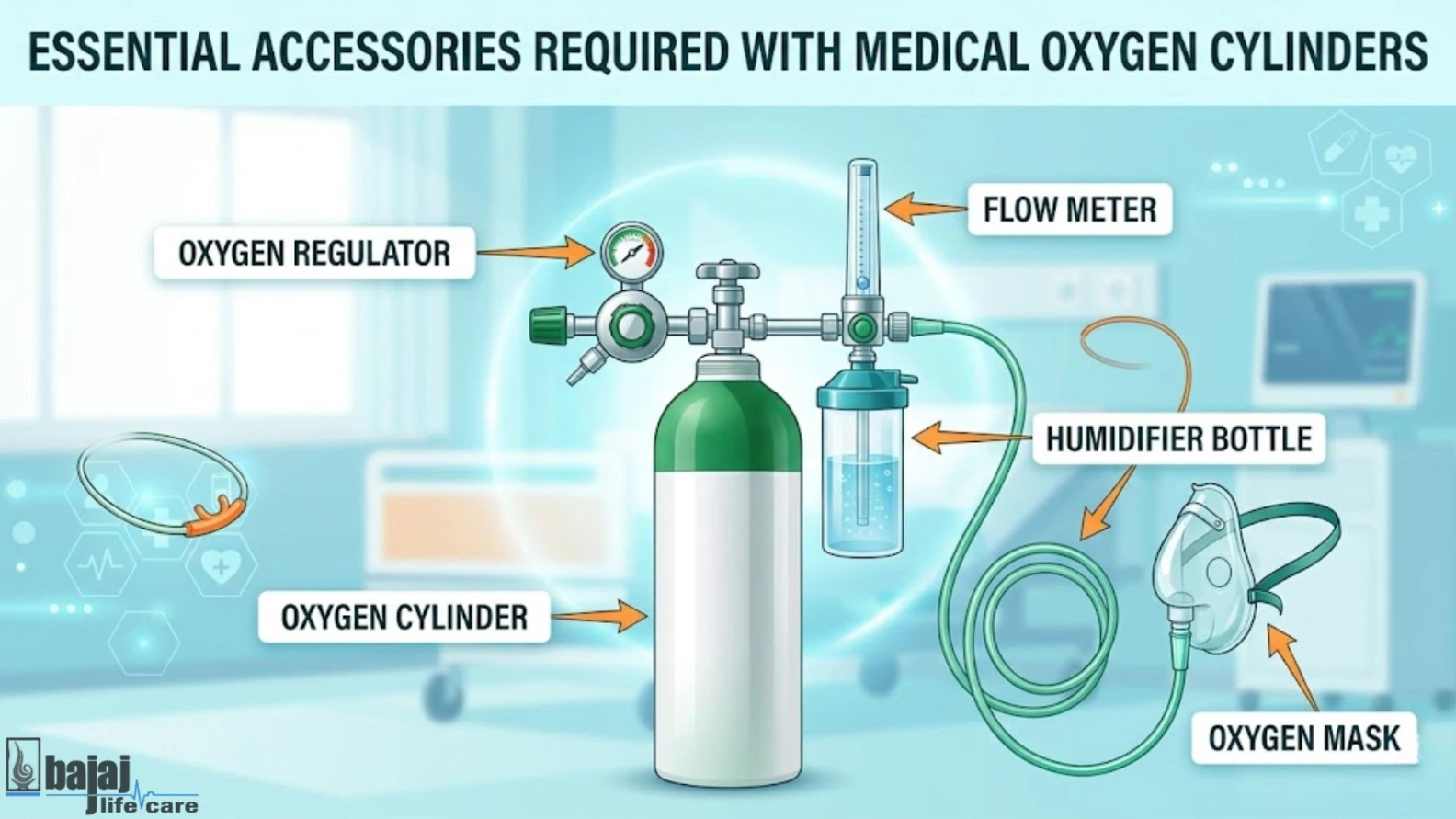
An oxygen cylinder alone is not sufficient for oxygen administration. Additional components are required for safe and effective therapy.
Oxygen Regulator
Controls oxygen pressure and flow rate.
Humidifier Bottle
Adds moisture to oxygen, reducing airway dryness during prolonged therapy.
Oxygen Flowmeter
Measures and regulates oxygen delivery accurately.
Nasal Cannula
Used for low-flow oxygen therapy.
Oxygen Mask
Suitable for higher oxygen concentrations and emergency situations.
Cylinder Trolley
Improves transportation and safety when moving cylinders.
Important Safety Guidelines
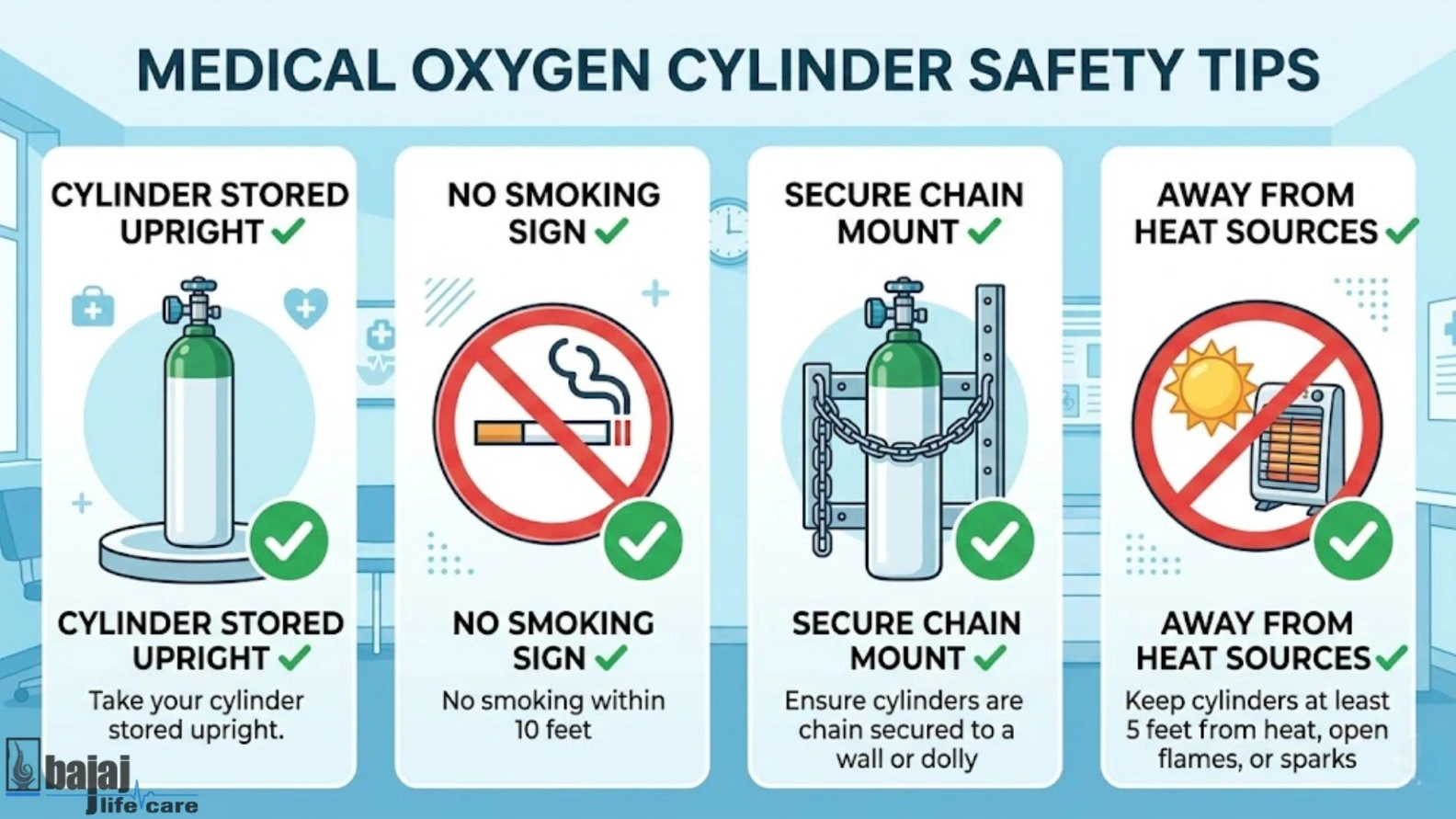
Medical oxygen is a life-supporting gas and should always be handled carefully.
Safety Recommendations
- Keep cylinders upright and secured.
- Store away from heat sources.
- Avoid smoking near oxygen equipment.
- Use only approved regulators and accessories.
- Check for leaks regularly.
- Ensure periodic cylinder testing and certification.
- Follow manufacturer instructions for handling and storage.
Proper maintenance helps ensure reliable oxygen delivery and reduces safety risks.
Oxygen Cylinder vs Oxygen Concentrator
| Feature | Oxygen Cylinder | Oxygen Concentrator |
|---|---|---|
| Oxygen Source | Stored Oxygen | Generates Oxygen |
| Electricity Required | No | Yes |
| Portability | High | Moderate |
| Emergency Use | Excellent | Limited During Power Failure |
| Refilling Needed | Yes | No |
Many healthcare providers recommend keeping an oxygen cylinder as an emergency backup even when using an oxygen concentrator.
Need Help ?
When Should You Replace or Refill an Oxygen Cylinder?
A refill should be arranged when cylinder pressure falls below recommended operating levels. Healthcare facilities should maintain adequate reserve oxygen inventory to prevent treatment interruptions.
Patients using oxygen therapy at home should monitor pressure gauges regularly and schedule refills before oxygen levels become critically low.
Conclusion
Choosing the right oxygen cylinder size is crucial for ensuring reliable oxygen therapy, patient safety, and operational efficiency. Portable cylinders are ideal for home care and emergency transport, while larger cylinders support continuous oxygen delivery in hospitals and healthcare facilities.
Before purchasing an oxygen cylinder, consider the patient's oxygen requirements, expected duration of use, portability needs, and refill accessibility. Consulting with a qualified healthcare professional can help determine the most appropriate oxygen delivery solution for your specific application.
Frequently Asked Questions (FAQs)
Which oxygen cylinder size is best for home use?
Portable B-Type oxygen cylinders are commonly used for home oxygen therapy due to their manageable size and portability.
How long will a 10-liter oxygen cylinder last?
A 10-liter cylinder with approximately 1500 liters of oxygen can last around 12.5 hours at a flow rate of 2 liters per minute.
Which oxygen cylinder is used in hospitals?
D-Type and Jumbo oxygen cylinders are commonly used in hospitals for continuous oxygen supply and manifold systems.
Can oxygen cylinders be used without electricity?
Yes. Oxygen cylinders provide oxygen without requiring electricity, making them valuable during power outages and emergencies.
What accessories are required with an oxygen cylinder?
An oxygen regulator, humidifier bottle, flowmeter, oxygen mask or nasal cannula, and cylinder trolley are commonly required accessories.