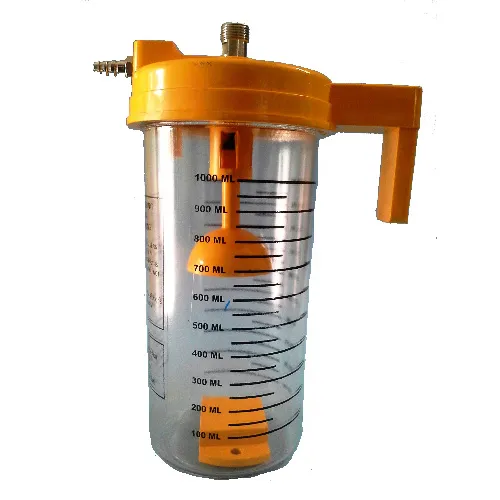
The Ward Vacuum 1000ml Jar is a medical suction collection container designed for use in hospital suction systems during airway clearance, fluid aspiration, and bedside suction procedures. Commonly used by anaesthesiologists, ICU clinicians, and respiratory therapists, the jar is suitable for operating theatres, emergency departments, recovery units, and ward-based suction setups. Its 1000ml capacity supports controlled collection of secretions, blood, and procedural fluids during short- to moderate-duration suction procedures. The jar is typically integrated with ward vacuum regulators and suction tubing assemblies in clinical suction management systems.
CLINICAL USE CONTEXT
Ward vacuum jars are routinely used in critical care and perioperative environments where controlled suction is required for secretion management and procedural aspiration. In ICU and emergency care settings, clinicians use suction collection jars during airway suctioning for patients with compromised respiratory clearance or tracheostomy support. During operative and recovery procedures, anaesthesia teams may connect the jar to central vacuum systems for temporary fluid collection and suction drainage. Respiratory therapists and nursing staff frequently utilise 1000ml suction jars for bedside pulmonary hygiene procedures, post-operative secretion clearance, and low-volume suction applications. Transparent collection chambers also assist clinicians in visually monitoring aspirated fluid volume and character during patient management.
FAQ
1. What is the Ward Vacuum 1000ml Jar used for?
The Ward Vacuum 1000ml Jar is used for collecting fluids, secretions, and aspirated material during medical suction procedures. It is commonly connected to hospital wall-mounted vacuum systems or portable suction units in wards, ICUs, and operating theatres.
2. Is the jar compatible with standard hospital suction systems?
Most ward vacuum jars are designed to integrate with standard clinical suction regulators and tubing configurations used in healthcare facilities. Compatibility should still be verified with the existing suction setup and connector type before use.
3. Can the Ward Vacuum 1000ml Jar be sterilised and reused?
Reusable suction jars may be cleaned and processed according to institutional sterilisation or high-level disinfection protocols. Healthcare facilities should follow manufacturer guidance and infection control procedures for safe reprocessing.
4. Is this suction jar suitable for ICU and emergency applications?
Yes, 1000ml suction collection jars are commonly used in ICU, emergency, and post-operative care settings where controlled secretion or fluid aspiration is required. The capacity is appropriate for routine bedside suction and short-duration clinical procedures.
5. Does the jar contain latex components?
Ward vacuum jars are generally manufactured using latex-free medical-grade materials to reduce the risk of latex-related sensitivity reactions in clinical environments. Procurement teams should verify product specifications if latex-free compliance is mandatory within their institution.
SAFETY DISCLAIMER
This product is intended for use by trained medical professionals within clinical and hospital environments. Users should verify compatibility with existing suction systems, tubing, and connectors prior to patient use. Cleaning, sterilisation, and decontamination procedures must follow institutional infection control and biomedical equipment protocols.
Alternative Products
These other products might interest you
| Specification | Details |
|---|---|
| Product Name | Ward Vacuum 1000ml Jar |
| Capacity/Size | 1000ml |
| Material | Medical-grade plastic |
| Colour | Transparent jar with coloured lid components |
| Usage Type | Reusable |
| Application | Medical suction and fluid collection |
| Category | Suction Accessories |
| Type | Ward Vacuum Collection Jar |
| Latex Information | Latex-free components recommended for clinical use |
| Packaging | Single unit |
| Compatibility | Suitable for ward vacuum suction systems |
| Sterilisation | As per institutional decontamination protocol |