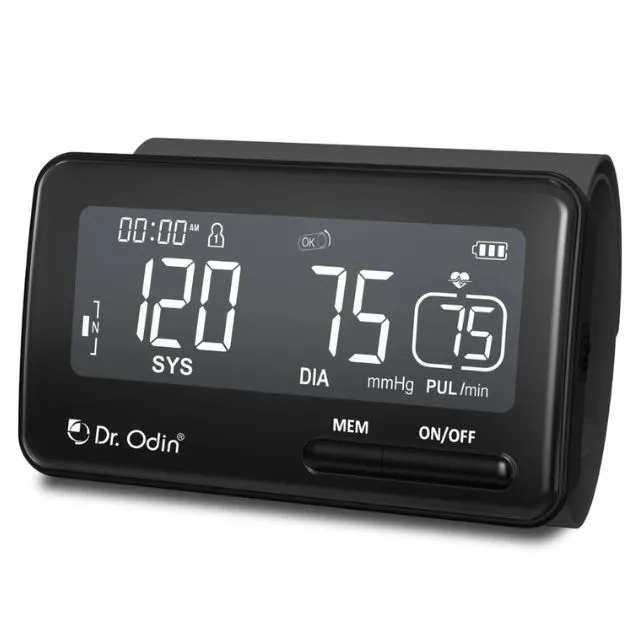
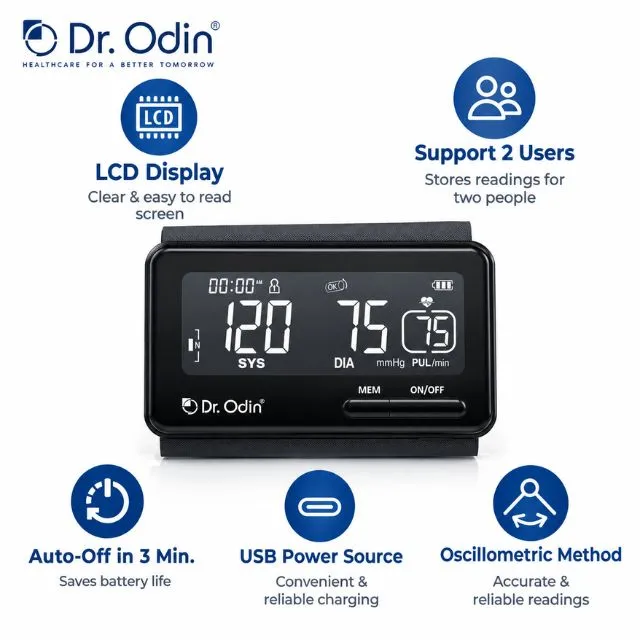
Dr. Odin Digital Upper Arm Blood Pressure Monitor
The Digital Upper Arm Blood Pressure Monitor is an electronic blood pressure monitoring device designed to provide a convenient way to obtain blood pressure readings using an upper-arm cuff.
Unlike manual blood pressure equipment that requires a separate pressure gauge and stethoscope, an automatic digital monitor uses an electronic display to present the measurement results. This makes the device convenient for routine home use and other appropriate monitoring situations.
The monitor typically consists of a digital display unit, an upper-arm cuff and an inflation system. The cuff is positioned around the upper arm before the measurement cycle is started. Once activated, the device automatically inflates the cuff and displays the available measurement information on the screen.
Depending on the exact model, the display may show systolic pressure, diastolic pressure and pulse rate. Features such as memory storage, automatic inflation, irregular-pulse indicators, multiple-user memory, rechargeable operation or date/time functions vary by model and should only be listed when they are actually present on the product.
Why choose an upper-arm digital monitor?
An upper-arm design provides a straightforward measurement format with a dedicated cuff that wraps around the upper arm. The electronic display makes the readings easy to view, while automatic operation reduces the number of manual steps required during measurement.
This type of device can be useful for people looking for a digital upper arm blood pressure monitor, automatic upper arm blood pressure monitor, or electronic upper arm blood pressure monitor for home use.
Always follow the manufacturer's instructions supplied with the particular model, especially for cuff positioning, operating procedure, cleaning and maintenance.
How to Use an Upper Arm Digital Blood Pressure Monitor?
- Read the manufacturer's instructions before first use.
- Sit comfortably and prepare the monitor.
- Place the cuff around the upper arm according to the manufacturer's instructions.
- Ensure the cuff is positioned correctly and is not excessively loose or tight.
- Keep the arm in the recommended position.
- Start the automatic measurement.
- Remain still and avoid unnecessary movement while the monitor operates.
- Wait for the measurement to finish.
- Read the displayed information.
- Record the result if you need to maintain a personal measurement log.
- Follow the manufacturer's instructions for repeated measurements and device maintenance.
Important: Cuff placement, body position and measurement procedure can affect the displayed reading. Always follow the instructions supplied with your specific device.
Difference Between Upper-Arm and Wrist Blood Pressure Monitors
| Feature | Upper-Arm Monitor | Wrist Monitor |
|---|---|---|
| Measurement Location | Upper arm | Wrist |
| Cuff Design | Upper-arm cuff | Wrist cuff |
| Setup | Cuff placed around upper arm | Device placed around wrist |
| Position Sensitivity | Requires correct arm/cuff positioning | Position can be particularly important |
| Common Use | Home and routine monitoring | Portable/travel-oriented use |
| Operation | Automatic on many models | Automatic on many models |
| Portability | Moderate | Generally compact |
The best choice depends on the manufacturer's instructions, cuff requirements, intended use and user preference.
Manual vs Digital Blood Pressure Monitor
| Feature | Digital Monitor | Manual Monitor |
|---|---|---|
| Display | Electronic display | Usually analogue pressure gauge |
| Inflation | Often automatic | Usually manual |
| Operation | Generally simpler | Requires more technique |
| Stethoscope | Usually not required | Typically required |
| Recording | Some models have memory | Usually manual |
| Home Convenience | High for automatic models | Requires more skill |
Safety Disclaimer
This product is a blood pressure monitoring device. It is not a substitute for professional medical advice, diagnosis or treatment. Do not make medical decisions solely from a device reading. Follow the manufacturer's instructions for correct operation and cuff placement. If you have concerns about your readings or symptoms, consult an appropriately qualified healthcare professional.
Alternative Products
These other products might interest you
| Specification | Parameter / Feature | Details |
| Measurement Method | — | Oscillometric Method |
| Measurement Range | Systolic Pressure | 60 mmHg – 260 mmHg |
| Diastolic Pressure | 40 mmHg – 200 mmHg | |
| Pulse | 30 – 180 Beats/Minute | |
| Measurement Accuracy | Pressure | ±3 mmHg or ±2% of the reading above 200 mmHg |
| Pulse | ±5% | |
| Pressurization | — | Automatic Pressurization |
| Function | — | • Low Battery Detection • Automatic Power-Off |
| Power Source | — | Type-C Charging Port |
| Operating Environment | Temperature | 10°C – 40°C (50°F – 104°F) |
| Humidity | 15% – 93% RH | |
| Pressure | 800 hPa – 1060 hPa | |
| Storage Environment | Temperature | 10°C – 40°C (50°F – 104°F) |
| Humidity | ≤ 93% RH |